Sculptor · Storyteller · Wyoming
The West,
cast in bronze.
From intimate studio editions to larger-than-life public monuments, D. Michael Thomas preserves the people, places, and stories of the American West.
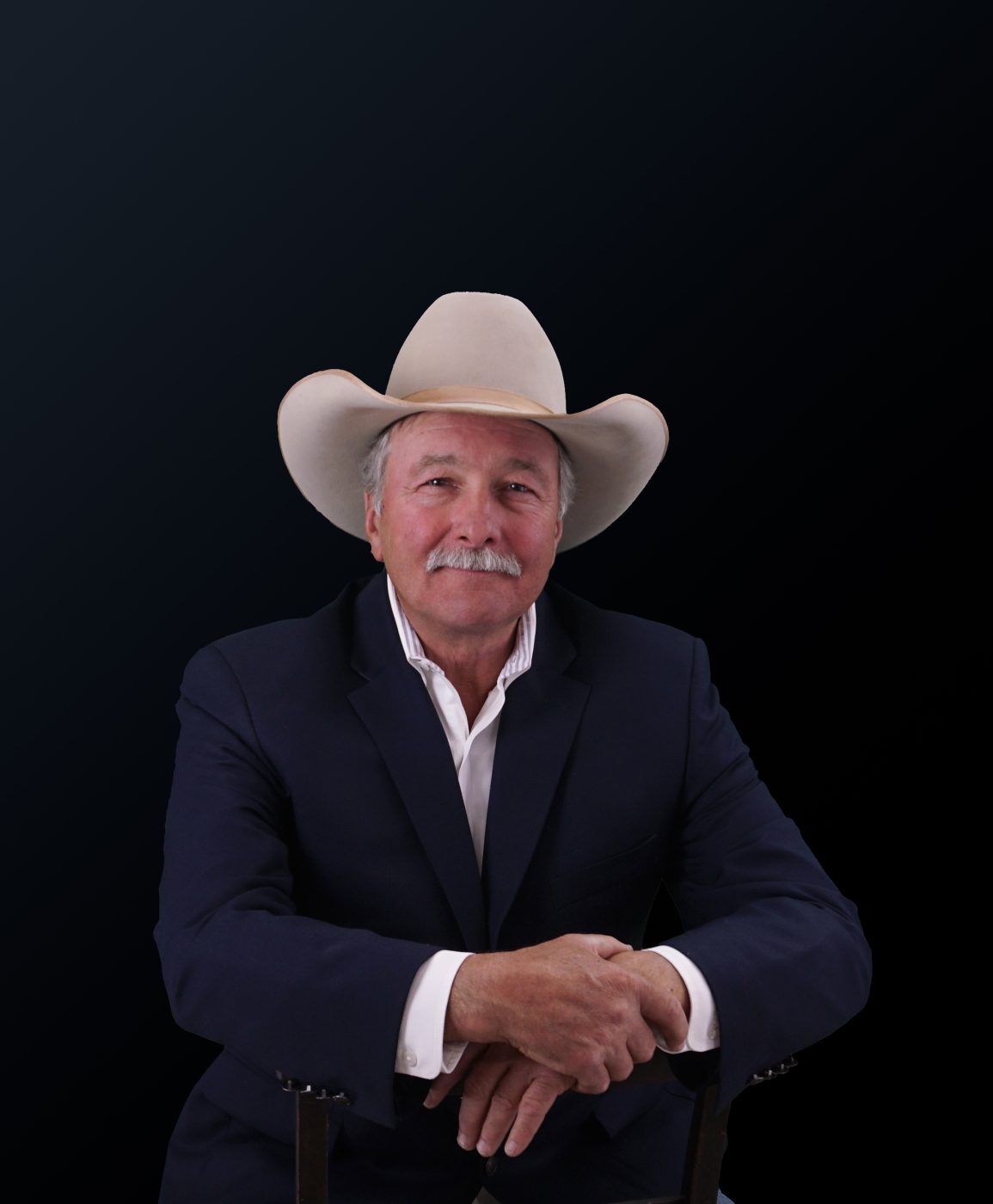
A living archive of the American West
He is a storyteller.
He speaks with his hands.
He speaks with his hands to create work that captures a way of life that has either gone to history or is fast disappearing. It is said that in order to understand the present, one must first understand the past — the same may be said about the work of an artist.
Six ways in.
Each area stands on its own page, and each links onward to the others.
Sculptures
85 bronzes from the working catalogue, filterable by decade.
Enter 02Monuments
13 monumental and life-scale public works, and how commissions come about.
Enter 03Places
Buffalo, Kaycee, Laramie, and Cheyenne — the work in its landscape.
Enter 04Timeline
22 dated entries across Wyoming history, the artist, and the work.
Enter 05Studio
The five stages, and ten plates from inside the studio.
Enter 06Artist
Biography, awards, and selected press.
Enter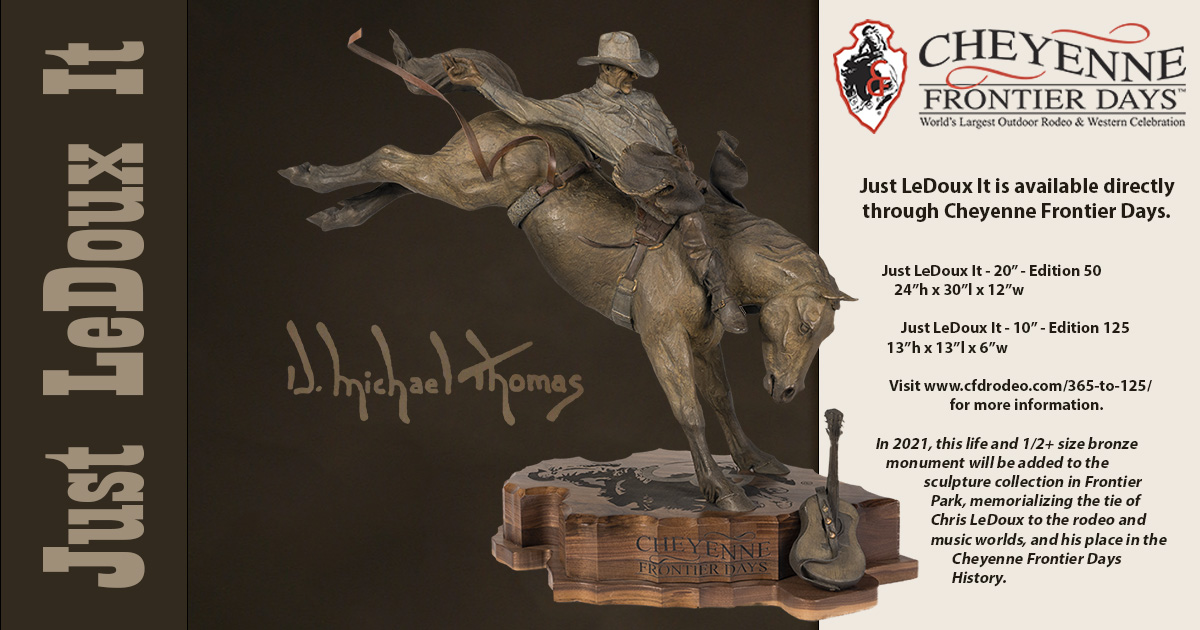
Commissions
Work made for
one place only.
Much of the public work exists because a town, a university, or a family asked for a specific story to be told. Just LeDoux It was commissioned to honour Chris LeDoux for the 125th Cheyenne Frontier Days. Breakin’ Through stands at the artist’s own alma mater. The first monument, in 1993, told both sides of the Johnson County Cattle War for the town it happened in.
- 01 The story
What happened, who it happened to, and why it still matters here. - 02 The site
Where it will stand, how it will be approached, and at what scale. - 03 The clay
Armature and clay, reviewed with you before anything is cast. - 04 The bronze
Molds, foundry, chasing, and patina. - 05 The dedication
Transport, installation, and the day it becomes public.
The West he covers,
in order.
The work reaches back through the Plains Indian wars, the Nez Perce flight, the Johnson County Cattle War, the outlaw country above Kaycee, and the rodeo arena. Every entry below is the history a specific bronze was made to carry — scroll the rail to follow it forward.
-
Plains
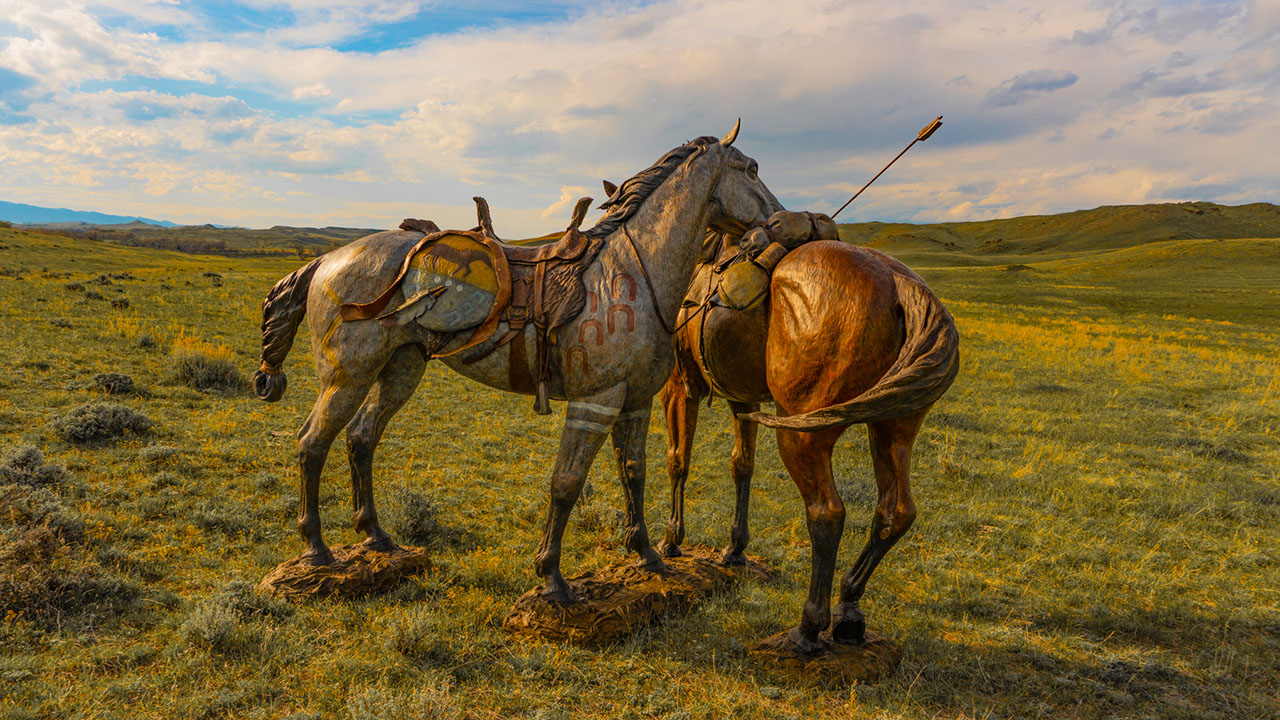
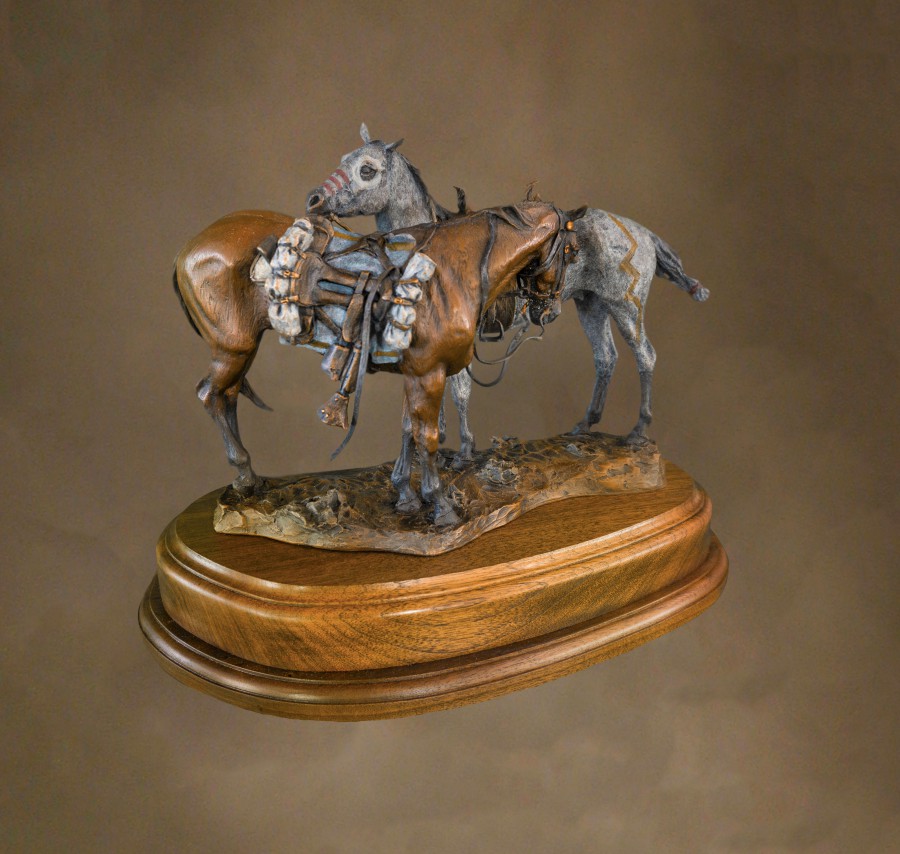
The cavalry and the war pony
The tack dates the scene: the cavalry horse carries 1874 military issue, while the Indian pony wears its own style of saddle. Lightning marks zig-zag across the pony’s hind quarters to speed it into battle and terrify its foe; circles ringed around its eyes were meant to sharpen its sight.
In bronze: After the Dust Settles
-
Battle
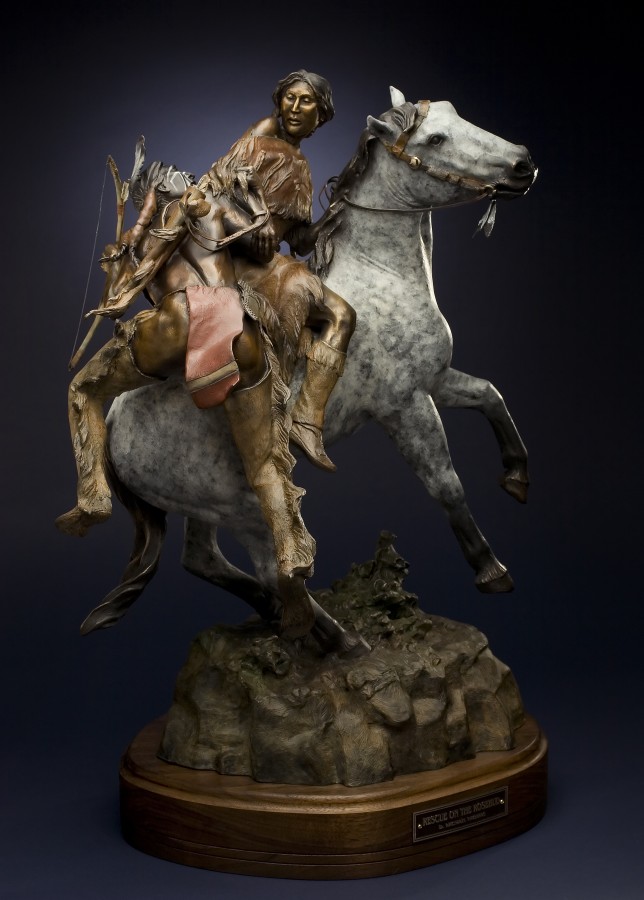
The Rosebud
Eight days before the Little Bighorn, a large force of Sioux and Cheyenne warriors surprised General George Crook and his 1,325 troops on Rosebud Creek. They fought with a cohesion and organisation the Army had seldom seen, then shifted back to guerrilla tactics that broke the cavalry’s rhythm entirely.
In bronze: Rescue on the Rosebud
-
Battle
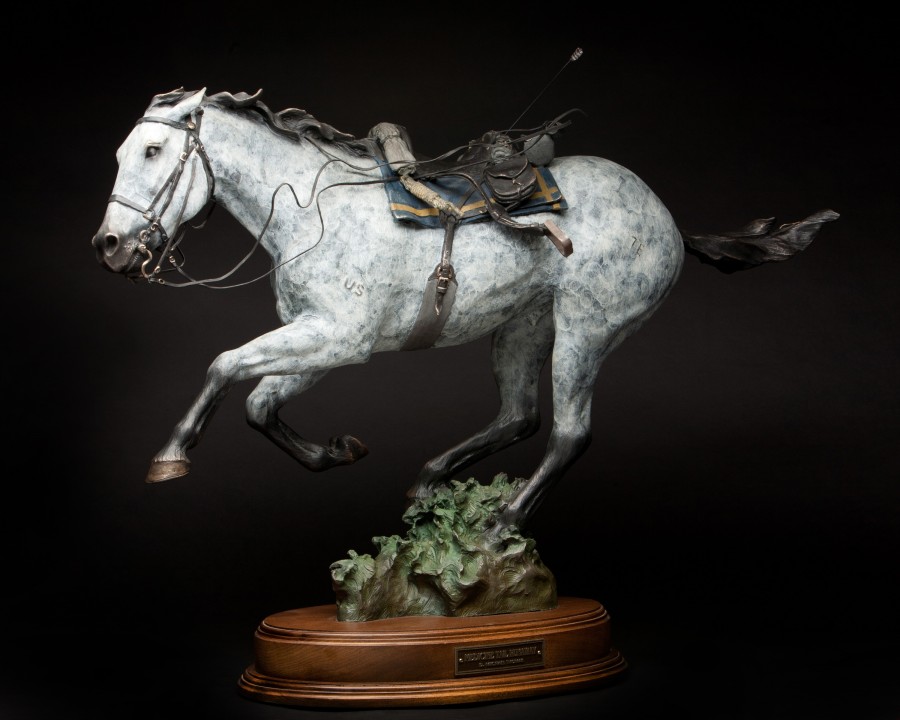
Medicine Tail Coulee
A reckless charge by the so-called Son of the Morning Star turned the heat of a lazy June afternoon into an explosion of Sioux, Northern Cheyenne, and Arapaho warriors. His offensive became a defence as sheer numbers and steep geography turned against him, and the mounted cavalry horses — the war machines of the age — wheeled into a mad retreat up the coulee.
In bronze: Medicine Tail Runaway
-
Nez Perce
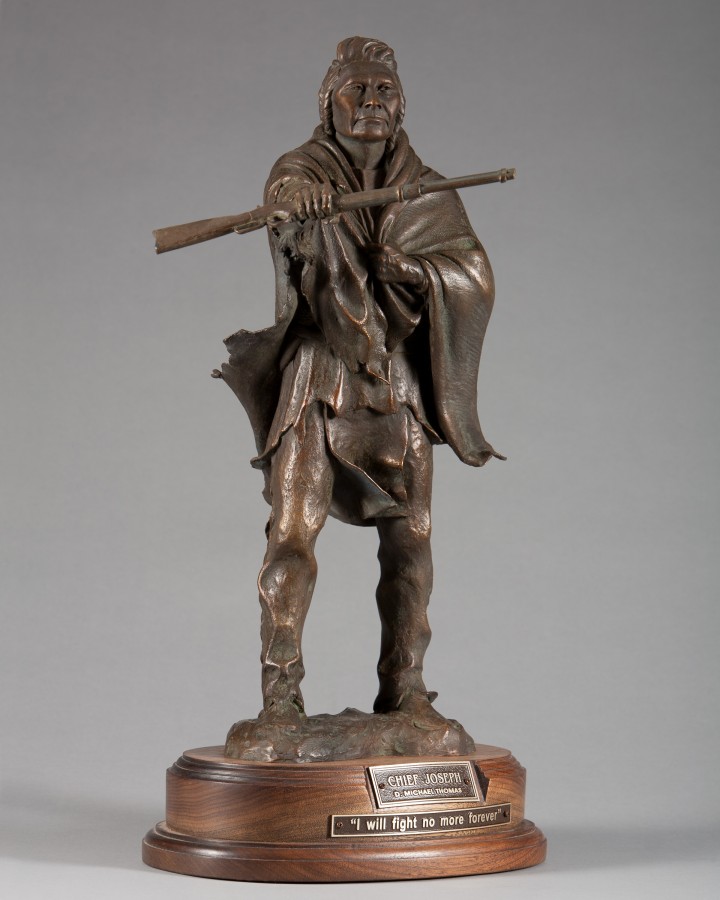
Chief Joseph
The Nez Perce leader whose band was pursued more than a thousand miles across the Northwest in the flight of 1877. The portrait anchors a thread that runs forward almost forty years, to a horseman who rode with that same band as a boy.
In bronze: Chief Joseph
-
Wyoming
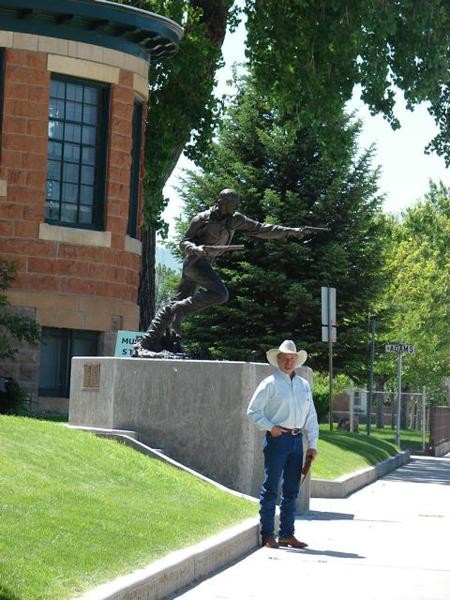
Nate Champion’s last run
A lone man, besieged by the hired guns of fear and greed, single-handedly begins a western civil war against the push of unwarranted authority. With his Colt and his Winchester he makes one last run out of his blazing cabin, and falls to twenty-eight bullets. The Johnson County Cattle War became the subject of the artist’s first monument, in Buffalo.
In bronze: Nate Champion’s Last Run
-
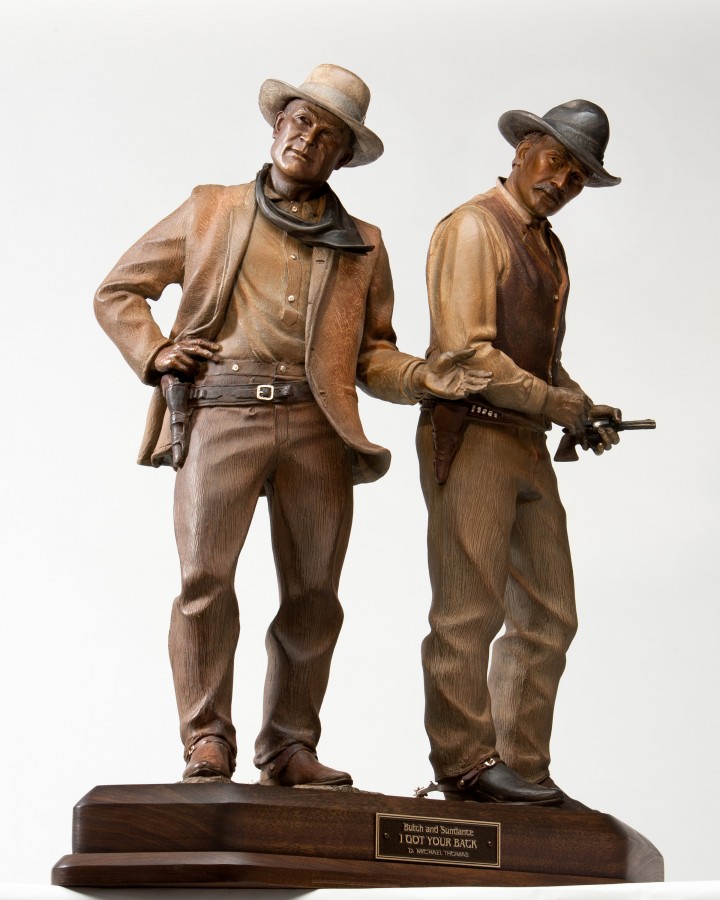
Outlaw
Hole-in-the-Wall, and after
How they met their end remains a riddle no historian has solved — there is still no evidence whether the pair lived or died in South America. The only clues left behind are a red dirt trail and four rocks where the Hole-in-the-Wall hideout cabin once stood, in the country above Kaycee.
In bronze: Butch and Sundance – Got Your Back
-
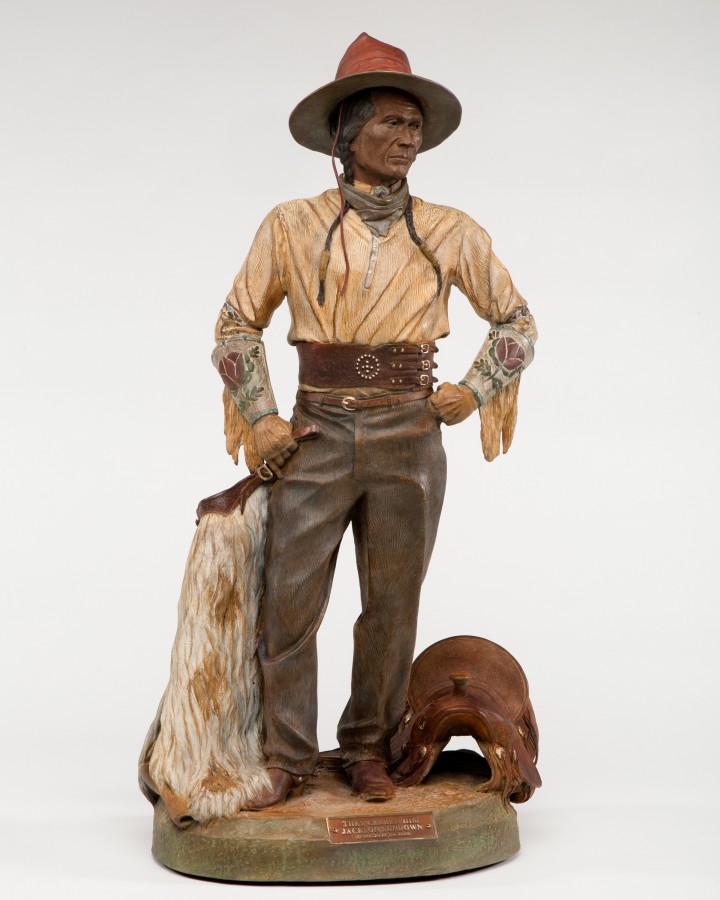
Rodeo
They called him Jackson Sundown
A Nez Perce horseman who as a youth was among the band that fled in 1877, and who in 1916 — in his fifties — won the bucking championship at the Pendleton Round-Up. The artist found him on a Crow Fair poster in King’s Saddlery, asked who he was, and went looking for the rest.
In bronze: They Called Him Jackson Sundown
-
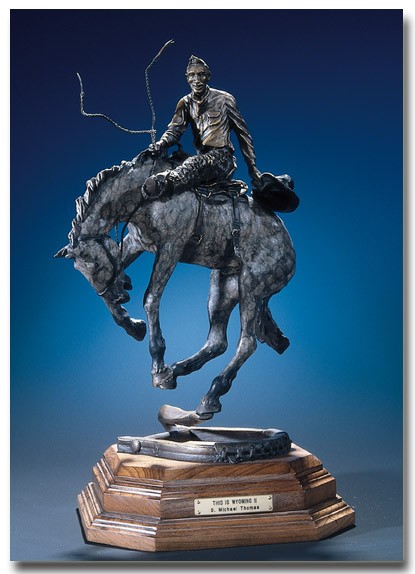
Emblem
Red Wing, and a license plate
First Sergeant George Ostrom rode up to Crow Agency, Montana, for a tough mount and came back with Red Wing. His commanding officer claimed the good-looking horse — then two black bear mascots wandered onto the parade ground, and rider and horse parted company. Neither knew the image would become the longest-lasting license plate in history.
In bronze: This is Wyoming II
-
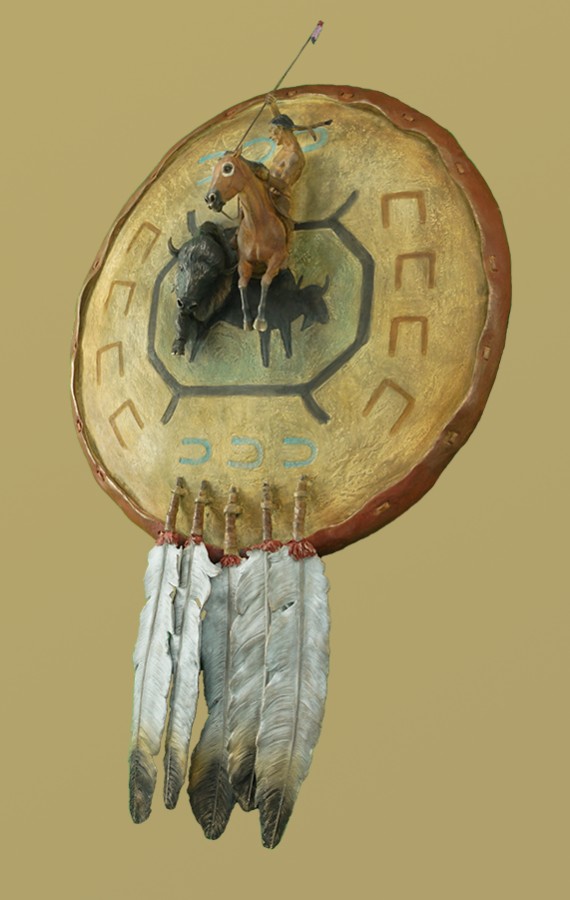
Belief
The shield and the vision
A charging bison, an approaching arrow, a hail storm — the outcome of any of them could be altered by the skilled use of a mystical dream and a dried buffalo hide. Painted with scenes of what is to come, a shield protects its bearer today and brings him luck tomorrow.
In bronze: The Vision
9 entries, drawn from the sculptures’ own records. Dates the records do not establish are left as eras rather than guessed at. The artist’s own chronology lives on the Timeline.
The archive, respectfully restored
Keep the photograph.
Lose the old website background.
Historic images will remain authentic while being presented as museum material: cleaned crops, warm paper, clear captions, original/restored viewing, dates, locations, people, and provenance.
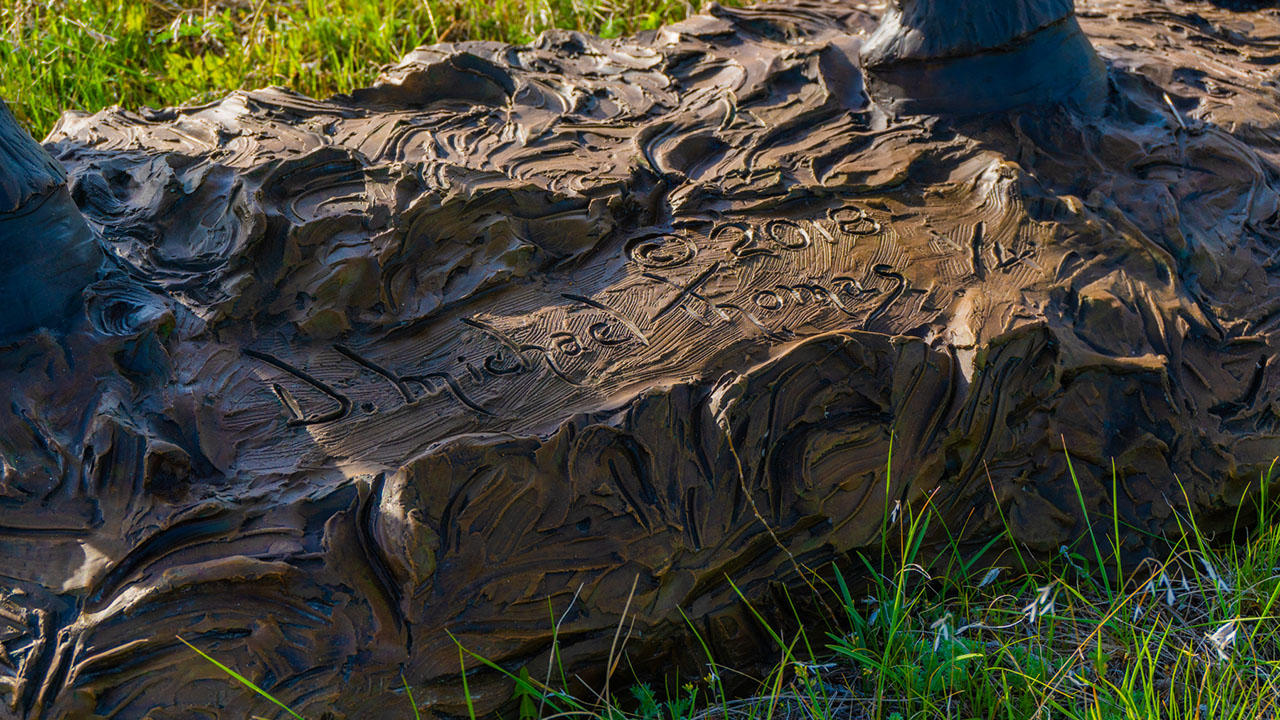
ARCHIVAL PHOTOGRAPH
After the Dust Settles — signature detail Source: current D. Michael Thomas website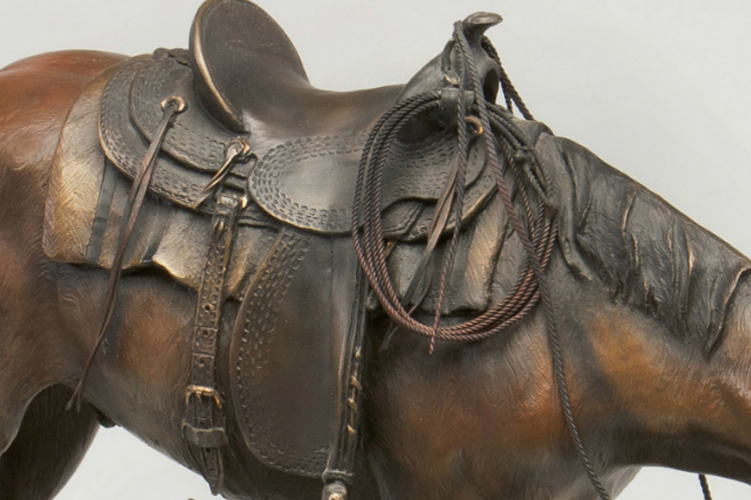
Commissions & inquiries
Stories built
to outlive us.
Monument commissions, available editions, and exhibition enquiries all begin with a conversation.
Start an inquiry